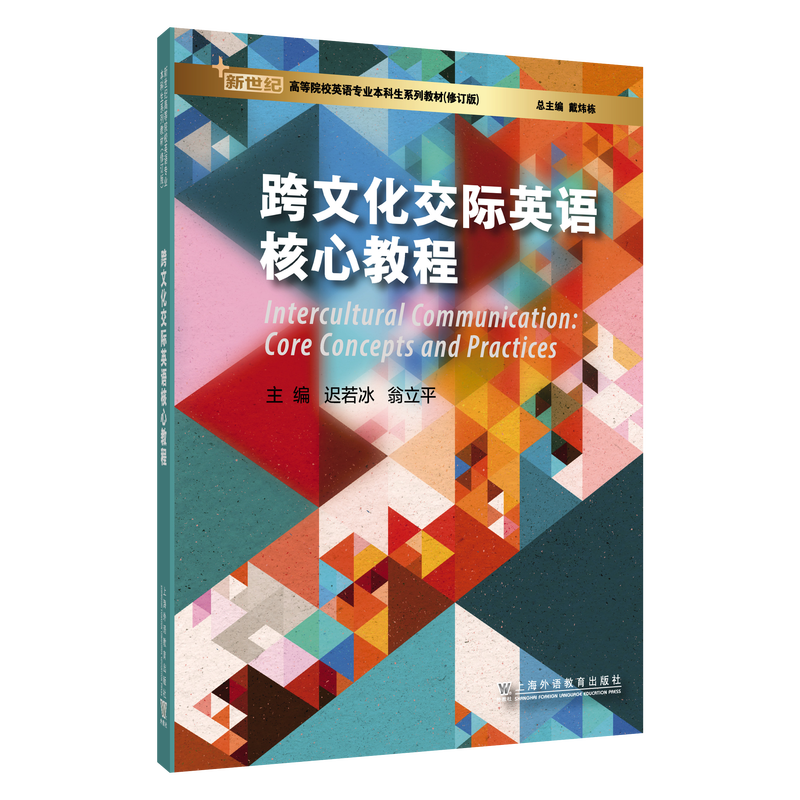
目录
MODULE 1 LAYING THE FOUNDATION
Unit 1 Intercultural Communication: Why and What
Section 1 Contextualizing Intercultural Communication: Cultural Diversity and Cultural Hybridity
Section 2 Imperatives of Studying Intercultural Communication
Imperative 1: To Facilitate Personal Growth
Imperative 2: To Contribute to Social, National and Global Cohesion
Imperative 3: To Train Professionals for Global Businesses
Imperative 4: To Navigate the Challenges of the AI Era
Section 3 Features of Intercultural Communication
The Fish Metaphor / The Shoe Metaphor / The Tree Metaphor / The Roller Coaster Metaphor / The Glasses Metaphor / Integrated Analysis
Additional Reading
Reading 1 Introduction to Global Living
Reading 2 Cross-Cultural Communication
Unit 2 Who We Are: Personal and Cultural Identities
Section 1 Clarifying Identities
Who Am I?
Section 2 Types or Categories of Identities
Cultures and Identities / Layers or Levels of Identity
Section 3 Going Deeper—Constructing Complex Identities
Identities under Construction / Attributions and Mistaken Identities / Multiple, Hybrid, Fused, Transcultural, or Third-Culture Identities
Additional Reading
Reading 1 You Should Know
Reading 2 Place, Space, and the Other: The Foundations of Identity
Unit 3 How We See the World: Perception and Stereotypes
Section 1 Perception and Culture
Perception / The Selection Stage / The Organization Stage / The Interpretation Stage
Section 2 Stereotype, Prejudice and Discrimination
Stereotype / Stereotype and Social Categorization / Stereotyping / From Stereotype to Discrimination
Section 3 Ethnocentrism
Ethnocentrism / Types of Ethnocentrism / Why Do We Tend to Be Ethnocentric? / Be Mindful of Ethnocentric Tendencies
Additional Reading
Reading 1 The Danger of a Single Story
Reading 2 Imagining Funny Foreign Teachers
Unit 4 What Is Important to Us: Cultural Values and Patterns
Section 1 Culture and Its Behavioral Consequences
Section 2 Cultural Values
Hofstede's Cultural Dimensions Theory / Schwartz's Cultural Values Theory
Section 3 Cultural Norms: Tight Versus Loose
Additional Reading
Reading 1 Subjective Culture
Reading 2 The Secret Life of Social Norms
Task 1 My Cultural Story
MODULE 2 UNDERSTANDING THE PROCESS
Unit 5 How We Communicate: Verbal Styles
Section 1 Communication Styles
Components of Communication Styles / Tasks That Communication Styles Concern
Section 2 High- and Low-Context Communication
High-Context Versus Low-Context Communication Types / Strategies for Communication Efficiency
Section 3 Dimensions and Characteristics of Intercultural Verbal Styles
Four Classic Pairs of Interpersonal Communication Styles / Self-Enhancement and Self-Effacement / Approach Versus Avoidance Toward Verbal Communication / Characteristics of Online Intercultural Verbal Communication
Additional Reading
Reading 1 Cultural Context
Reading 2 Translation and Interpretation
Unit 6 How We Communicate: Nonverbal Styles
Section 1 Nonverbal Communication and Its Components
Environment and Context / Physical Appearance / Nonverbal Behavior
Section 2 Functions of Nonverbal Communication
Conveying Meaning / Regulating Verbal Communication
Section 3 Cultural Differences in Nonverbal Communication
Repertoires / Rules / Meanings / Becoming Effective in Intercultural Nonverbal Communication
Additional Reading
Reading 1 Chronemics
Reading 2 Culture, Voice, Interpersonal Space, and Touch
Unit 7 How We Learn: Cultural Differences in Education
Section 1 Learning and Cultural Contexts
What Is Enculturative Learning? / What Is (Cross- or Inter-) Cultural Learning?
Section 2 Differing Classroom Cultures
The Instructor Level / The Student Level
Section 3 Shared Goals of Intercultural Education
Global Goals of Intercultural Educators / Impacts of Technology on Intercultural Education
Additional Reading
Reading 1 Educational Development Journeys: Inspiring Examples
Reading 2 Learning How to Be a Student in College
Unit 8 How We Work: Cultural Differences in Business
Section 1 Organizational Cultures and Classic Theories in Organizational Communication
Section 2 Business Communication—The Role of Language in Multicultural Workplaces
Section 3 Communication Styles at Workplaces
Meetings / Greetings / Hierarchy and Face Concern
Section 4 Leadership Across Cultures
GLOBE Leadership Styles / Confucian Leadership
Section 5 Virtual Global Work Teams
Additional Reading
Reading 1 Dispersed Distribution
Reading 2 Four Culture Myths
Task 2 Intercultural Case Development, Analysis, and Presentation
MODULE 3 HONING THE ABILITIES
Unit 9 How We Relate: Building Intercultural Relationships
Section 1 Why Intercultural Relationships Matter
Types of Intercultural Relationships / Benefits of Intercultural Relationships
Section 2 What Shapes Intercultural Relationships
Interpersonal and Linguistic Processes / Cultural Norms and Expectations / Cognitive Categorization / Emotional Processes / Structural/Contextual Influences
Section 3 How to Build and Manage Intercultural Relationships
Designing Meaningful Contact / Strengthening Relational Competence
Additional Reading
Reading 1 Speaking My Way Across Boundaries
Reading 2 Reflections on Love Across Cultures
Unit 10 How We Fit In: Handling Cross-Cultural Adaptation
Section 1 Moving Across Cultures
Stories of Crossing Cultures / Definition and History of Acculturation / The ABCs of Acculturation
Section 2 Experiencing Acculturation
How Do People Perceive Cultural Differences? / How Do People Feel Along the Way? / How Do People Deal with Acculturation? / What Are the Consequences of Acculturation?
Section 3 Managing Acculturation
Additional Reading
Reading 1 The ABC of Culture Shock
Reading 2 "Returning" to Shanghai: Chinese-American Stories of Belonging
Unit 11 How We Solve Problems: Managing Intercultural Conflict
Section 1 Conflict
Negative or Positive / Types of Conflict / Process of Conflict / Intercultural Conflict
Section 2 Conflict Management Styles
Strategies for Conflict Management / Conflict Management Across Cultures
Section 3 The Case of China
How We Deal with Conflicts in a Chinese Context
Section 4 Virtual Conflict
Nature and Features / Internet Violence
Additional Reading
Reading 1 The History of Mediation and Why It Is Still in Use Today
Reading 2 Intergroup Conflict
Unit 12 How We Grow Globally: Developing Intercultural Competence
Section 1 A Preliminary Understanding of Intercultural Competence
Defining Intercultural Competence / Main Dimensions of Intercultural Competence
Section 2 Understanding Components of Intercultural Competence
Fantini's Composite Framework / Deardorff's Pyramid Model
Section 3 Perspectives of Intercultural Competence
Foreign Language Education Perspective on ICC / Adaptation Perspective on ICC / Mindfulness Perspective on ICC
Section 4 Developing Intercultural Competence
Potential Problems in Intercultural Communication / Strategies for Developing ICC
Additional Reading
Reading 1 Developing Intercultural Competence to Thrive in a Diverse and Rapidly Changing World
Reading 2 Breaking Down Barriers with Artificial Intelligence (AI): Cross-Cultural Communication in Foreign Language Education
Task 3 Tell a China Story
改写说明:






 电子营业执照
ICP备案证书号:
电子营业执照
ICP备案证书号:  沪ICP备05013223号-20
 沪公网安备 31010902003034号
出版物经营许可证: 新出发沪批字 第 T0015 号
沪公网安备 31010902003034号
出版物经营许可证: 新出发沪批字 第 T0015 号